From the Biotechnology Laboratory to Classroom Applications: ABE Online Teaching Meetings
From the Biotechnology Laboratory to Classroom Applications: ABE Online Teaching Meetings
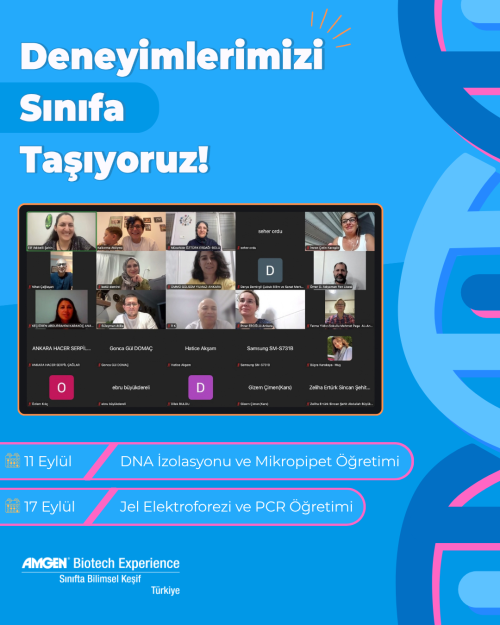
The ABE Teacher Community continues its online teaching meetings to bring biotechnology applications into classrooms and strengthen experience sharing among teachers. Bringing together new and experienced teachers on the same platform, the online teaching meetings held between 21:00 and 22:30 covered the topics of "DNA Isolation and Micropipetting" on September 11, 2026, and "Gel Electrophoresis and PCR" on September 17, 2026. Nearly 40 teachers attended both sessions, discussing how to transfer laboratory experiences into classroom dynamics.
Applications Extending from the Laboratory to the Classroom
The main focus of the meetings was how to bring laboratory work into the classroom environment and integrate it into the active learning processes of students. During the sessions, how techniques such as DNA isolation, micropipetting, gel electrophoresis, and PCR could be addressed with students of different age groups was discussed in detail through concrete classroom examples.
Various teaching strategies were shared to enable teachers to design this process not merely as laboratory work, but as holistic learning experiences that develop students' scientific thinking, observation, data interpretation, and research skills. Discussions based on real experiences allowed participants to exchange ideas on how they could adapt these applications in line with their own course outcomes and student needs.
Experience Sharing Inspires Teachers
One of the most productive parts of the meetings was the insights shared by experienced ABE teachers. Our teachers Nihat Uzunoğlu, Hasan Altınışık, Cansu Destanoğlu, Aysun Besler, and Süleyman Atilla presented examples of the applications they implemented in their own classrooms, sharing their in-class implementation strategies for laboratory work.
These insights not only created a guiding model for teachers newly joining the community but also sparked innovative ideas that can be applied at different grade levels. Teachers learning from each other's experiences and sharing the challenges they faced along with the solution methods they developed have further strengthened professional solidarity and interaction within the community.