Plant-Based Microplastic Filtration: Testing the efficacy of okra and fenugreek extracts on microplastic filtration for A. salina
Plant-Based Microplastic Filtration
Testing the efficacy of okra and fenugreek extracts on microplastic filtration for A. salina
Authors: Lavichant, N., Leano, S.
Abstract:
Microplastics and microparticles have long been documented to be harmful towards marine life and bio-organisms. However, many removal methods are either chemically unsafe, expensive, or inaccessible for widespread use. Recent research suggests that naturally occurring polysaccharides found in okra and fenugreek can effectively bind to microplastics and facilitate their removal from water. This study aims to combat current issues, testing the effectiveness of locally available plant extract (okra & fenugreek) on isolating microplastics from microplastic-infused water in the presence of brine shrimp (Artemia salina).
Artificial saltwater was infused with microplastics and divided into five treatment groups: okra extract, fenugreek extract, coffee filter, positive control (microplastic-contaminated water with no treatment), and negative control (saltwater without microplastics). Equal numbers of A. salina cysts were introduced into each treatment and incubated under constant light for 24 hours. The effectiveness of each treatment was evaluated by comparing hatching rates.
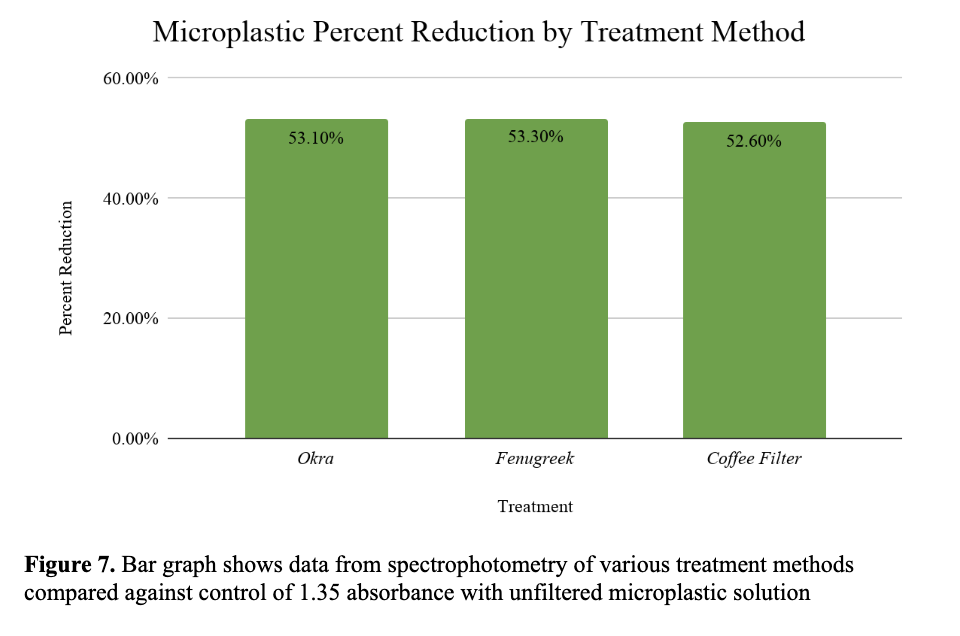
Results showed that the okra, fenugreek, and coffee filter treatments all produced moderate A. salina hatching after 36 hours, while the positive control showed no hatching and the negative control showed the greatest growth. Spectrophotometry indicated that all three treatments reduced microplastic absorbance by approximately 53%, with fenugreek achieving the highest reduction (53.3%).
These findings suggest that plant-based microplastic removal methods may provide a low-cost and environmentally sustainable alternative to extant filtration methods. Okra and fenugreek extracts offer an alternate approach for reducing microplastics and mitigating its harmful effects on aquatic organisms. Further research could help expand possibilities, ensuring that solving against microplastic pollution can become sustainable, affordable, and accessible.
Introduction:
Microplastic pollution has become a widespread environmental issue, with particles found across various marine ecosystems. These materials are known to disrupt feeding behavior, reproduction, and survival in species, particularly in early development. Despite growing awareness of these risks, current mitigation strategies remain flawed: many conventional filtration and chemical treatments are either environmentally damaging due to pollution or inaccessible in low-resource areas. As a result, there is a growing need for sustainable, affordable, and safe alternatives.
Recent studies have begun to investigate plant-derived polysaccharides as potential bio-flocculants that bind to suspended microplastics. Polysaccharides from plants such as okra and fenugreek show promise; however, existing research is largely limited to theoretical models rather than live organisms. There is a notable gap in experimental work that examines real environmental impacts.
This study aims to address these gaps by evaluating the effectiveness of locally accessible okra and fenugreek extracts in reducing microplastic concentration in artificial seawater containing Artemia salina. By assessing hatching success, survival, and behavioral activity, this experiment investigates whether plant-based filtration can provide a low-cost, environmentally sustainable solution. It was hypothesized that okra and fenugreek would outperform coffee filtration and improve brine shrimp hatching, survival, and activity compared to untreated microplastic-infused water.
Methods:
Extraction of Okra Mucilage:
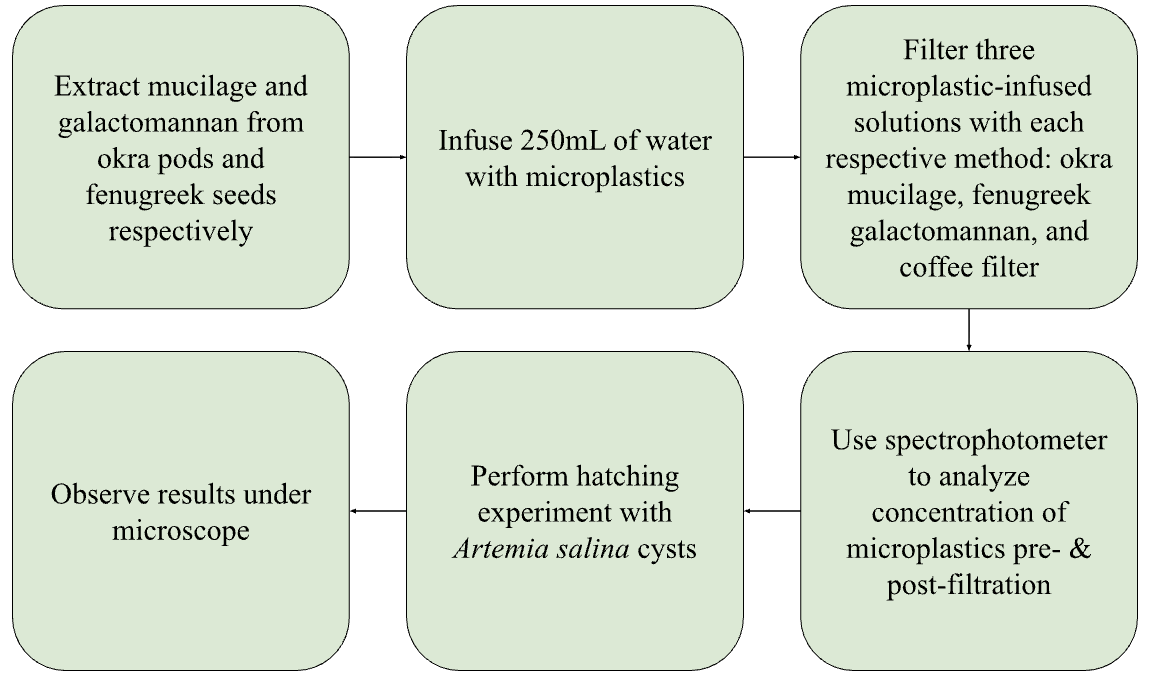
Extraction followed the procedure by Rajalakshmi and Sangeetha (2). Fresh okra pods were frozen, sliced into small pieces, and grinded with a mortar and pestle; the pods were then soaked in 1,000 mL of water for 20 hours at room temperature. The mixture was filtered through muslin cloth to separate the mucilage-containing extract from the solid plant material. The extract was centrifuged at 10,000 rpm for 10 minutes at 26°C and then precipitated at a 1:2 ratio of solution:ethanol under continuous stirring. The separated mucilage was collected by filtration through muslin cloth. The collected material was dried under shade for 24 hours, followed by oven drying at 42°C for 96 hours. Material was ground into a powder and stored at 4°C for use in microplastic extraction.
Extraction of Fenugreek Galactomannan:
Extraction followed the method by Teekanam et al. (3). Galactomannan was extracted from fenugreek seeds by first crushing the seeds and immersing them in a 5% NaCl solution. The pH of the mixture was adjusted to 5 and incubated at 37°C for 96 hours. The extract was then separated by centrifugation at 10,000 rpm for 10 minutes at 4°C to obtain galactomannan. Purification was carried out by precipitation with 70% ethanol, followed by centrifugation at 6,000 rpm for 7 min. The precipitation steps were repeated to enhance purity. Finally, the purified galactomannan was oven-dried and ground to obtain powder. The powder was stored at 4°C for later use in microplastic experiments.
Infusion of Microplastics:
Microplastic infusions were prepared using a modified protocol adapted from Nappo (5). Low-density polyethylene (LDPE) obtained from produce bags was used as the source of microplastics. A 60% water and 40% acetone solution was prepared, and shredded microplastics were added and incubated for 96 hours. The solution was filtered through muslin cloth before use in A. salina experiments.
Filtration and Testing With Brine Shrimp:
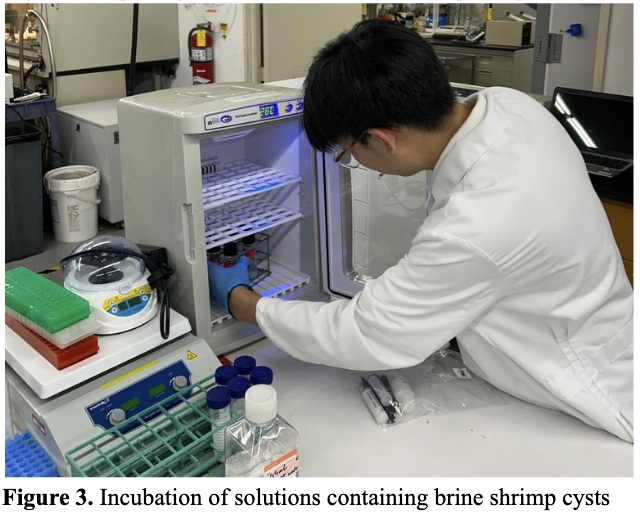
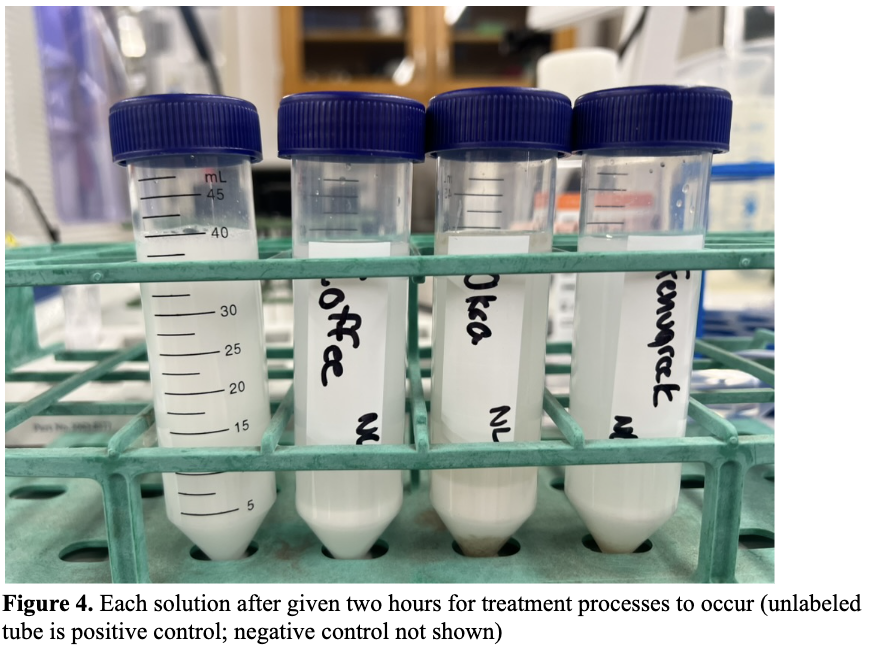
After preparation of the microplastic infusions, okra and fenugreek extracts were mixed at a ratio of 1g:L into each respectively labeled jars. The coffee filter treatment was performed by passing microplastic-infused water through a standard coffee filter. All solutions were mixed with 20 mL of microplastic-infused water and 20 mL of artificial salt water prepared with a ratio of 1g:25 mL of aquarium salt to deionized water. Then treatments were left for two hours to process.
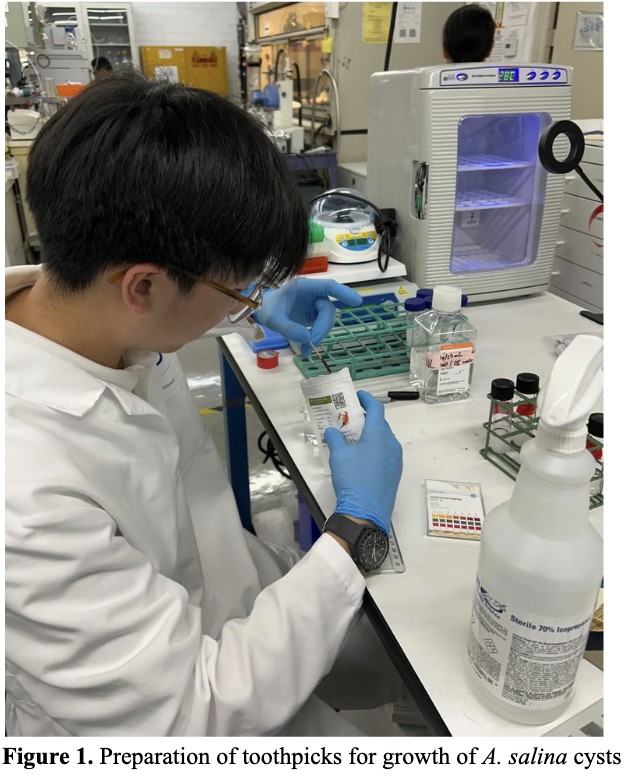
Following treatment preparation, five toothpicks were prepared with a marker line 2 cm from the tip. Each toothpick was dipped in salt water up the the water, then dipped into a bag of A. salina cysts as demonstrated in Figure 1. Each toothpick of cysts was then transferred into 5 jars filled with 10 mL of each independent variable. The jars were incubated under constant light for 24 hours. Hatching rate and survival rate of nauplii (newly hatched brine shrimp) were observed under a microscope at regular intervals to evaluate the effectiveness of each microplastic removal method.
Results: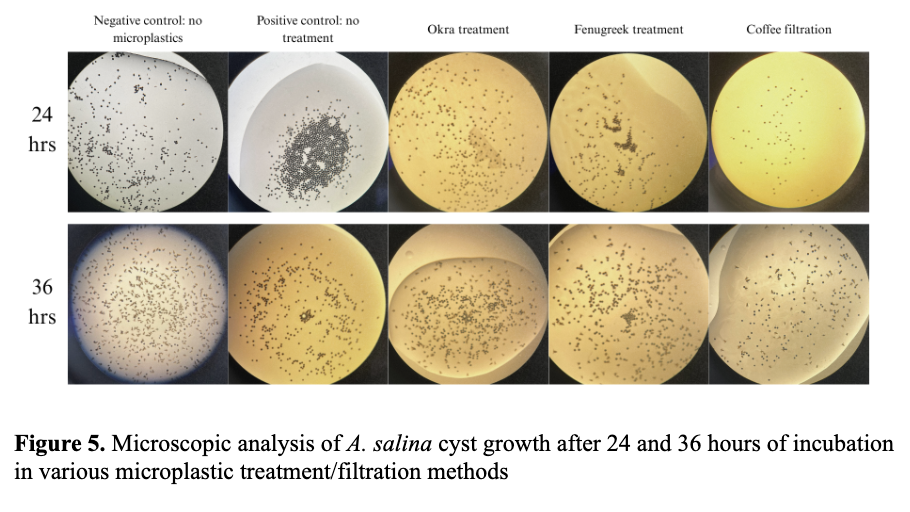
Brine Shrimp Analysis:
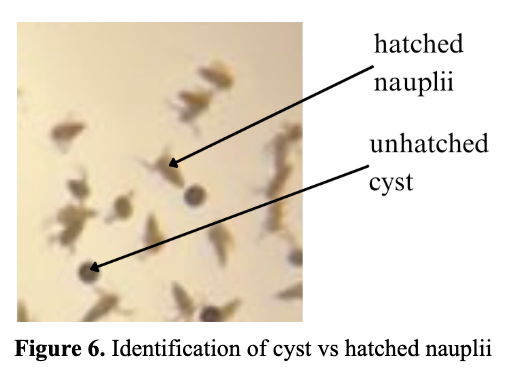
After 24 hours of incubation, only the negative control exhibited limited hatching of A. salina nauplii, while no visible hatching was observed in the positive control or any of the treatment groups (Figure 5). By 36 hours, the negative control demonstrated substantial hatching. The okra, fenugreek, and coffee filter treatment groups each showed similar levels of moderate hatching, indicating partial recovery compared to the negative control, as shown in Figure 5. The positive control continued to show no observable hatching, suggesting that exposure to untreated microplastic-infused water inhibited brine shrimp development.
Spectrophotometer Analysis:
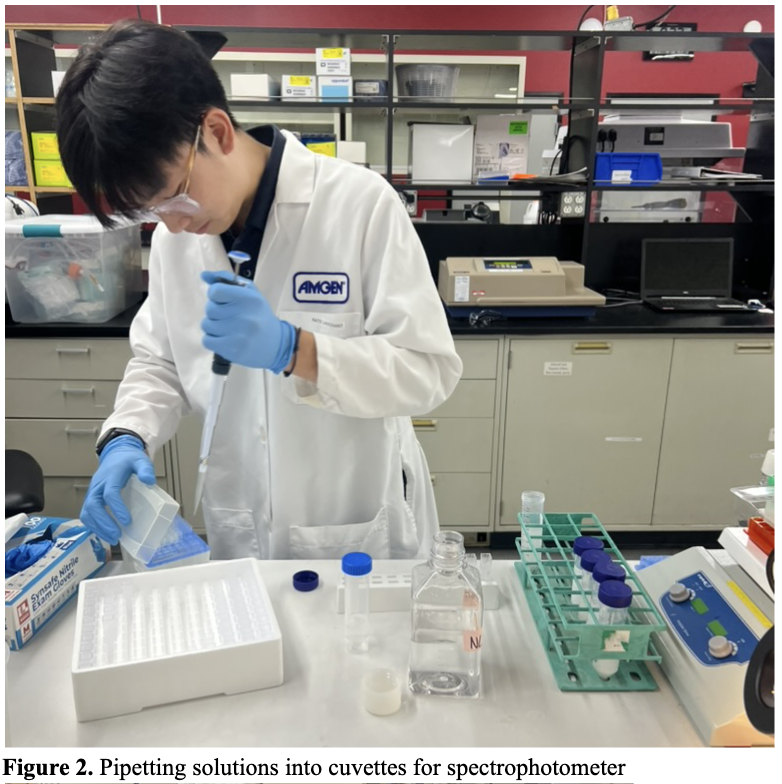
Spectrophotometry revealed that all treatment methods reduced the absorbance of the microplastic solution relative to the untreated control (absorbance = 1.350). All three results indicated similar effectiveness of microplastic removal, with fenugreek producing the greatest reduction in absorbance (53.3%), followed by okra (53.1%) and coffee filtration (52.6%).
Discussion:
Analysis of Results:
The results support the hypothesis that plant-based extracts can serve as effective microplastic removal agents. Spectrophotometry demonstrated that both okra and fenugreek extracts reduced microplastic absorbance by approximately 53%, supporting the findings of Srinivasan et al. (1) that naturally occurring polysaccharides can effectively isolate microplastics from water. Furthermore, biological testing with A. salina showed that treated samples exhibited hatching, while the positive control showed no hatching, suggesting that microplastic removal improved conditions for early development. Although the coffee filter treatment produced similar removal rates, plant extracts may be a more sustainable option due to the environmental impacts associated with the production of disposable filters. Overall, these findings demonstrate the potential of low-cost, environmentally friendly methods for mitigating microplastic pollution.
Limitations and Future Research:
Several limitations should be considered when interpreting these results. Due to time constraints, the experiment focused primarily on hatching success rather than long-term survival, growth, or reproductive outcomes of A. salina. The experiment could also look at hatching rates and activity of nauplii. Additionally, while okra and fenugreek extracts are biodegradable, their preparation required laboratory materials such as micropipette tips and gloves that may carry environmental costs. Future studies should investigate the effectiveness of these treatments across a wider range of water conditions, plastic types, and species. Long-term exposure experiments would also help determine whether plant-based microplastic removal methods provide lasting benefits.
Conclusion:
This study evaluated the effectiveness of okra and fenugreek extracts in removing LDPE microplastics from water and reducing their effects on brine shrimp. Spectrophotometry showed that both plant extracts reduced microplastic absorbance by approximately 53%, while biological testing demonstrated improved hatching compared to the untreated microplastic control. These findings support previous research suggesting that plant-derived polysaccharides can effectively isolate microplastics and demonstrate that such treatments may help mitigate their harmful effects on aquatic organisms. Overall, okra and fenugreek extracts show promise as low-cost, sustainable, and accessible alternatives for addressing microplastic pollution.
References:
Srinivasan, R., Bhuju, R., Chraibi, V., Stefan, M. C., Hien, N., Ustundag, D., Gill, J. N., Rasmussen, N., Saurenmann, B., Bracerra, J., Fowler, M., White, H., & Azadah, M. (2025). Fenugreek and Okra Polymers as Treatment Agents for the Removal of Microplastics from Water Sources. ACS omega, 10(15), 14640–14656. https://doi.org/10.1021/acsomega.4c07476
Rajalakshmi, M. & Sangeetha, S. (2023). Okra Mucilage - Method Of Extraction And A Novel Strategy For Pharmaceutical Drug Delivery System. Journal of Pharmaceutical Negative Results, 2473-2481. DOI: 10.47750/pnr.2023.14.S02.291.
Teekanam, J., Srinivasan, S., Uthayasooriyan, P., Subbiah, U., Govindasamy, B., & Athiappan, M. (2023). Extraction, purification and assessment of galactomannan from fenugreek seeds. DOI: 10.51248/.v43i02.2545.
Nappo, G. (2024). Green Explorers: Inquiry and Action for Environmental Stewardship. ABE Italy.